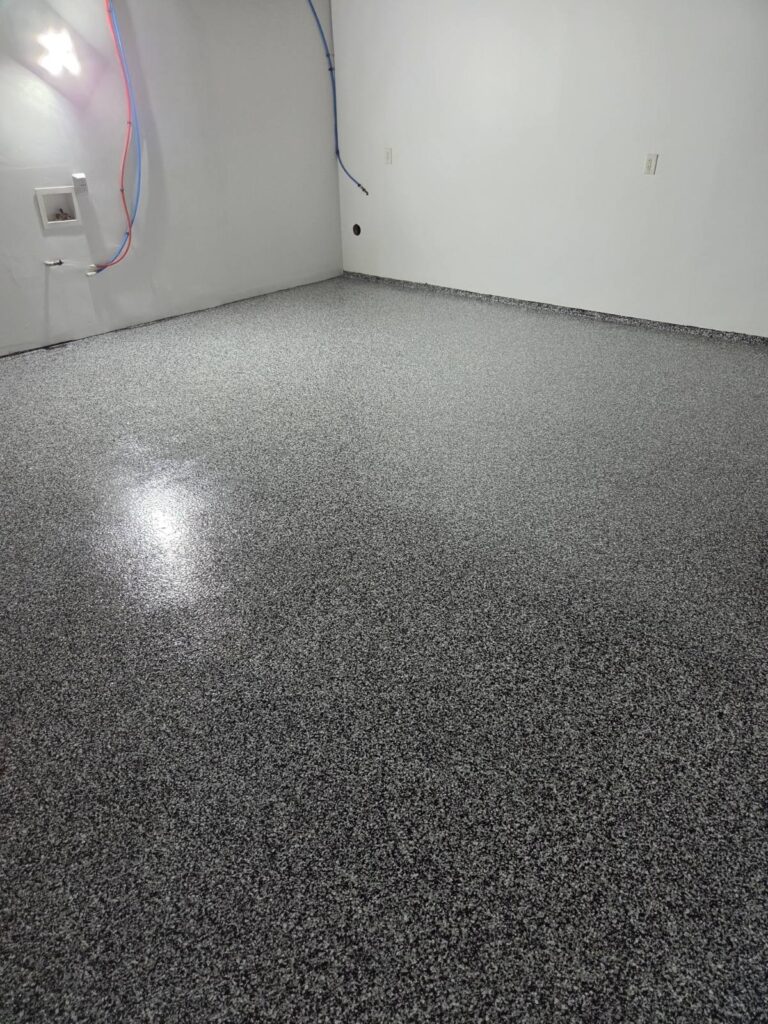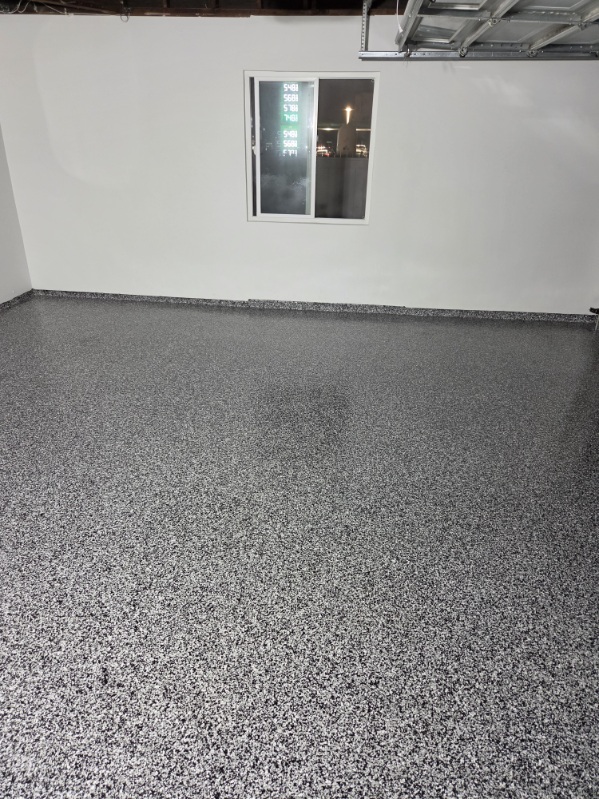
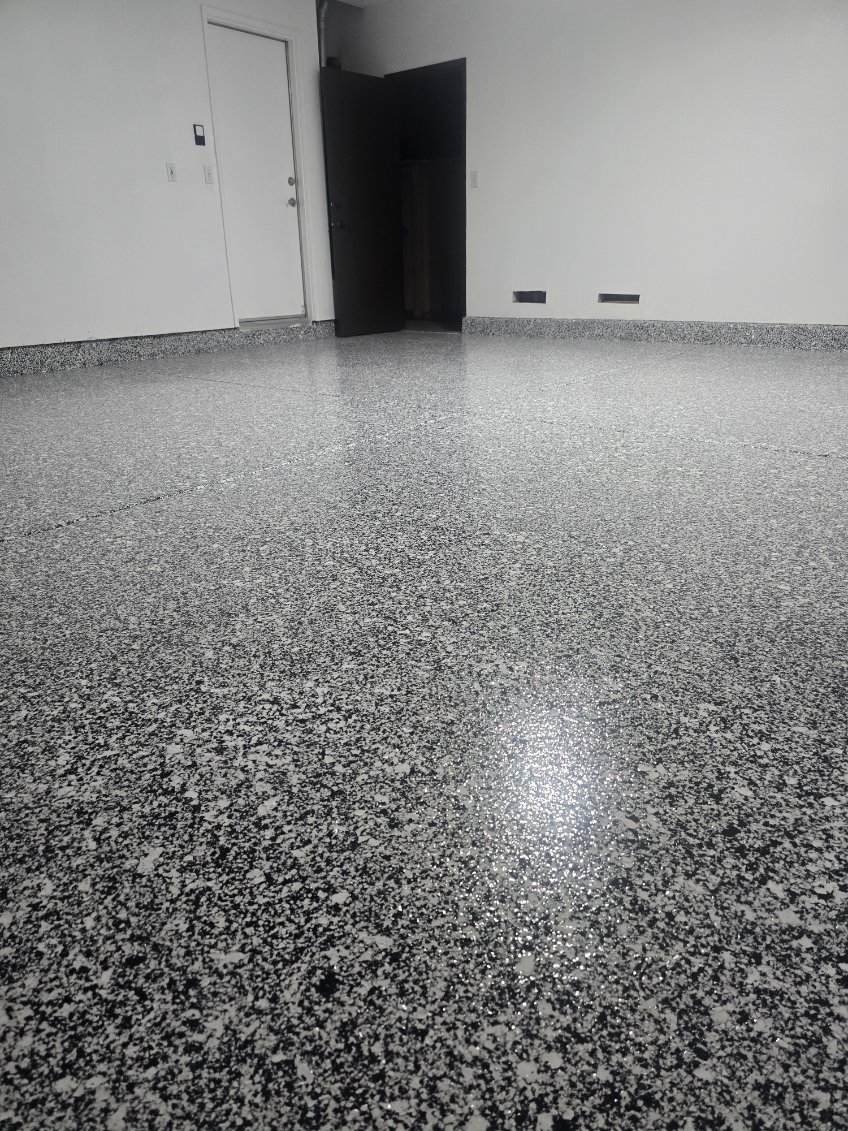
The short version: a professionally installed epoxy or polyaspartic garage floor should last 15 to 20+ years — while a big-box DIY kit often starts peeling in one to five. Same “epoxy,” wildly different lifespans. The gap almost never comes down to the product in the bucket; it comes down to how the concrete was prepped and what went on top. Here’s what actually decides how long your floor lasts — and the handful of shortcuts that make one fail early.
How long should an epoxy garage floor last?
- Pro flake + polyaspartic system (the common residential build): 15–20+ years
- Pro single-coat epoxy: often around 10 years before it’s due for a refresh
- Retail / DIY kit: commonly 1–5 years in a garage that gets daily use
Those are real-world ranges, not guarantees — a well-prepped floor near the top of the range and a rushed one near the bottom can be the exact same product.
A garage floor doesn’t wear out from the top down. It fails from the bottom up — at the bond between the coating and the concrete.
What actually determines how long it lasts
- Prep: the number-one factor. We diamond-grind the slab so the coating bonds mechanically into the concrete. A coating that’s only etched or rolled onto a dusty slab is already on a clock.
- Moisture: the number-one cause of failure. Concrete pushes water vapor upward, and if the slab wasn’t tested and the reading was high, that vapor lifts the coating from underneath — bubbling, then peeling.
- The system and topcoat: a UV-stable polyaspartic topcoat is what takes the daily abuse — hot tires, abrasion, sunlight — and protects the layers below.
- How you use the space: a daily-driver garage, a busy workshop and a weekend showpiece wear at very different rates.
- Sun exposure: here in Southern California, UV coming through an open door or window is the biggest aging factor — which is exactly what the topcoat is there to handle.
Why some floors fail early
When a floor peels, chalks or wears out years before it should, it’s almost always one of these shortcuts:
- Skipping the moisture test. Cheaper that day; delamination a year or two later.
- Acid etching instead of diamond grinding. Etching doesn’t open the concrete enough for a lasting mechanical bond.
- Coating over oil, old coatings or unrepaired cracks. The new coating is only as stuck-down as whatever’s under it.
- No UV-stable topcoat. Bare epoxy yellows and chalks in the sun; a proper clear coat prevents it.
- One thin, rushed coat. Looks fine on day one, shows hot-tire marks and wear within a year.
Notice the pattern: every one of these is a prep-or-system shortcut, not a flaw in epoxy itself.
The Southern California factor
Our climate is actually kind to garage floors — no freeze-thaw, no road salt grinding into the coating all winter. The one thing that does age a floor here is the sun. Garage doors open, windows let light in, and UV slowly yellows and chalks any coating that isn’t protected. A UV-stable topcoat is the single upgrade that matters most for a SoCal garage, and it’s a big part of why a properly built floor holds its look for years.
How to get the full 20 years out of your floor
- Dust-mop or rinse now and then, and wipe spills when they happen — a coated floor cleans up in minutes.
- Skip harsh solvents and abrasive scrubbing pads; mild cleaner and water is all it needs.
- Put a pad under jack stands and heavy equipment, and avoid dragging sharp metal across it.
- Years down the road, the clear topcoat can be refreshed to reset the floor’s protection — far cheaper than starting over.
Want to know how long your floor will last?
It all starts with the slab, so the honest answer depends on yours. Send us a few photos of your garage and we’ll tell you what it needs to last. For more, see our guide to picking the right garage-floor coating and what an epoxy garage floor costs in Orange County, then request a free estimate.