Not all garage-floor coatings are the same — and the “best” one is simply whichever matches your slab, how you use the space, and your budget. Here’s how we think about it at No Limit Epoxy, so you can make a confident choice and know what to ask any installer.
It starts with the concrete, not the color
The biggest factor in how long a floor lasts isn’t the brand of coating — it’s the prep underneath it. We diamond-grind the surface so the coating bonds mechanically into the concrete instead of sitting on top, and we check the slab for moisture, because a slab that pushes moisture can delaminate even a premium coating. Skip real prep and the best product will still peel; do it right and a good system holds up to years of daily use. It’s also the main reason a big-box DIY kit fails early.
The coating is only as good as the prep underneath it.
The main coating options
- Epoxy: the workhorse — a thick, hard, chemical-resistant base that bonds beautifully to prepped concrete. Great value, usually paired with a topcoat for UV and abrasion resistance.
- Polyaspartic / polyurea: fast-curing topcoats that resist UV yellowing and shrug off hot-tire pickup. Often layered over an epoxy base for a system that’s both tough and quick to return to service.
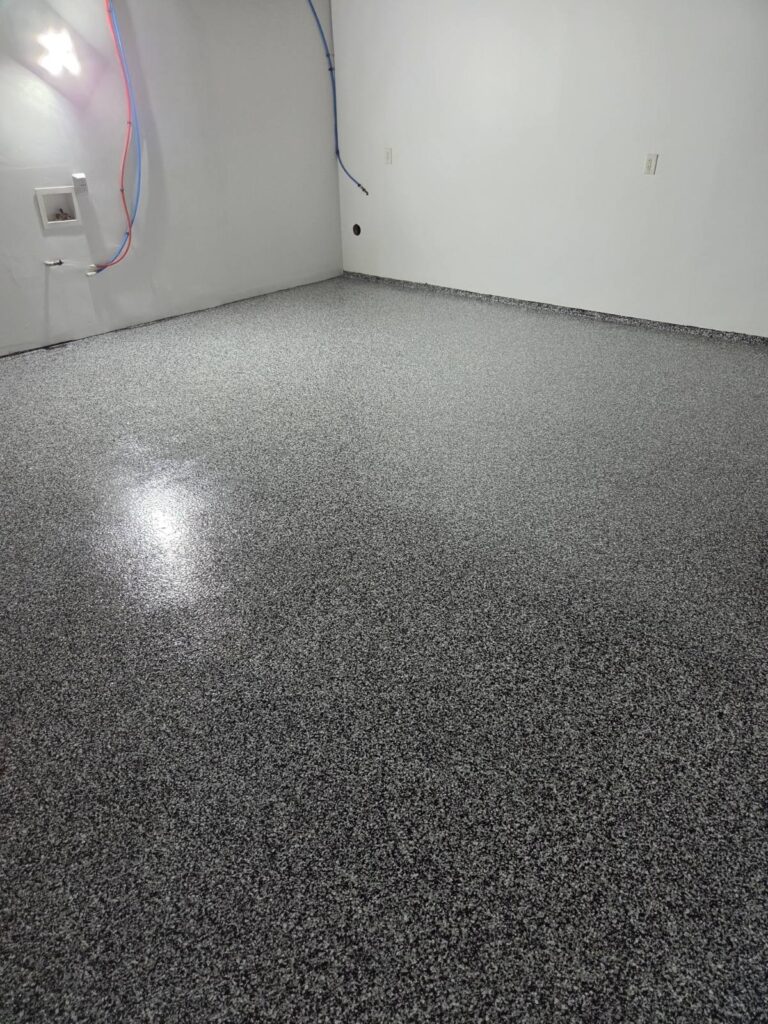
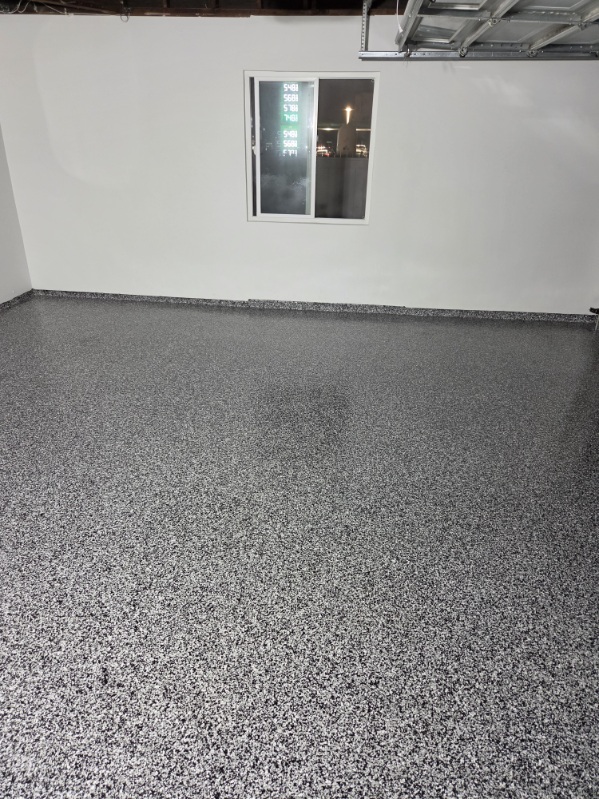
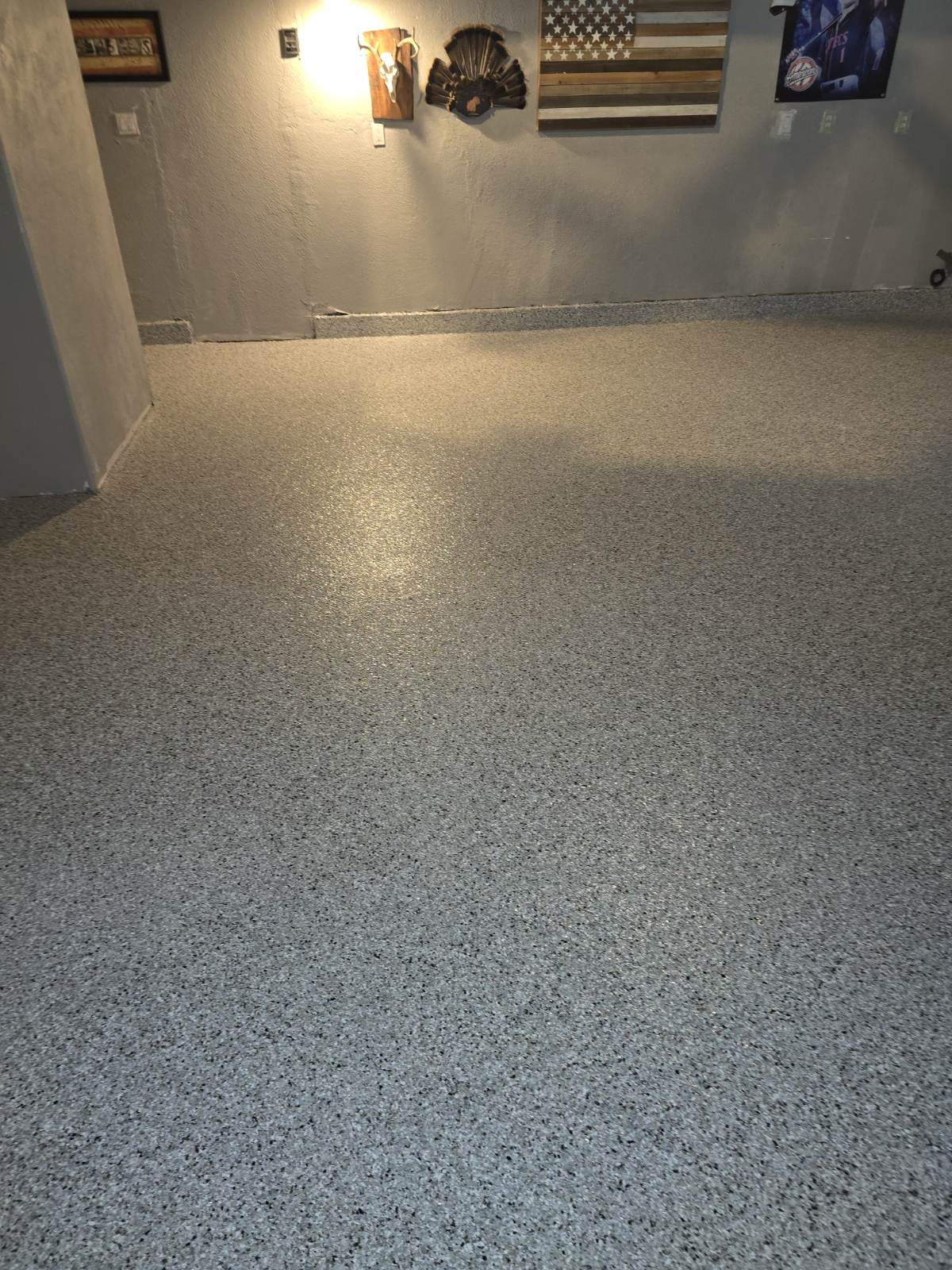
- Flake (broadcast) systems: color flakes broadcast into the coating add grip, hide minor imperfections, and come in endless blends — the most popular look for residential garages.
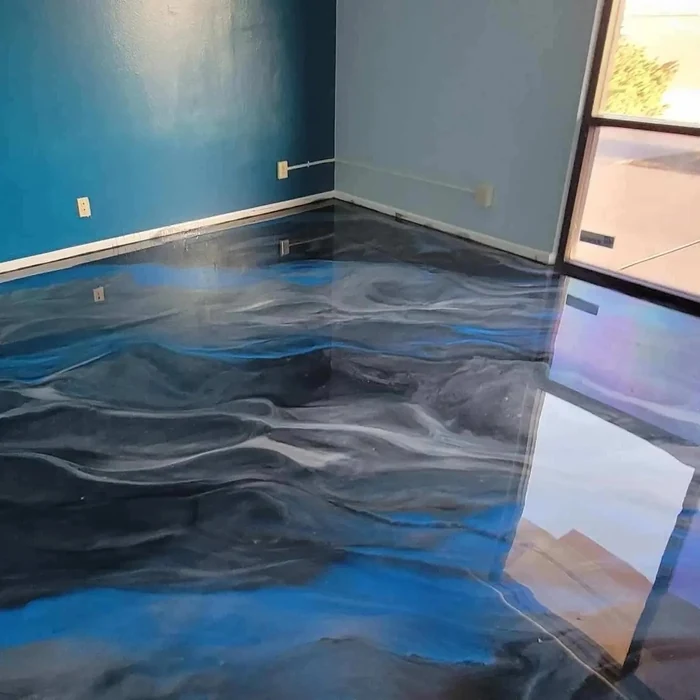
- Metallic: a designer finish with marbled, three-dimensional color. Stunning in a showroom or a garage you want to show off — chosen for looks more than heavy abuse.
Match the system to how you actually use the garage
- Daily-driver garage: a flake system with a polyaspartic topcoat handles hot tires, dropped tools and road grime.
- Workshop or home gym: prioritize impact and chemical resistance; a full flake build adds grip underfoot.
- Showpiece or car collection: metallic or a high-build clear shows off the space.
- Tight timeline: polyaspartic systems can often be walked on and parked on far sooner than a standard epoxy cure.
Then choose the finish
Once the system is right, color is the fun part. Flake blends let you match the room — subtle grays, or a bold color to match a build — and metallics give depth you can’t get any other way (here’s how to choose flake vs. metallic). We’ll show you samples and help you pick a finish that fits the room and the way you use it.
What a quality install includes
When you’re comparing quotes, make sure you’re comparing the same work:
- Surface prep by diamond grinding (not just acid etching)
- A moisture check on the slab
- Crack and joint repair before coating
- The right number of coats, with proper cure time between
- A UV-stable topcoat if the floor sees sunlight
Questions to ask any installer
- How will you prep the concrete?
- What system are you quoting, and why that one for my slab?
- How long until I can walk on it and park on it?
- What’s the warranty, and what voids it?
The fastest way to a straight answer
The right choice is different for every garage — that’s the whole point. Send us a few photos of your space and we’ll tell you what system fits your slab, your use and your budget, with no pressure. Request a free estimate.